
What another season of "we'll deal with it later" actually costs you
If that door has been opening and closing since before Y2K, here's the honest math: a stuck or misaligned auto-reverse sensor is a crushing hazard for anyone or anything under the door, a rusted cable or spring is a multi-hundred-pound failure waiting to happen, and an opener without rolling code security is an open invitation to anyone with a $30 code-grabber. None of that gets safer with time. It gets worse with every humid month, every afternoon downpour, and every storm system that rolls through before hurricane season officially winds down in late November. Deferring the real safety items isn't saving money. It's financing a bigger repair bill, or an ER visit, later.
That said, not everything about an old door is dangerous. Plenty of original hardware is fine and replacing it is just spending money to feel better. Here's how to tell the difference.
Non-negotiable: retrofit these now, no debate
- Auto-reverse photo-eye sensors. If your door predates the mid-1990s, it may not have the infrared safety sensors near the floor that stop the door from closing on a person, pet, or object. This is the single most important retrofit on this list. It's a federal safety standard for a reason, and it's one of the cheaper fixes relative to the risk it removes.
- Torsion spring containment. Older torsion springs often have no containment cable running through the center. If a spring under that much tension snaps without one, it can whip loose with enough force to cause real injury or punch through drywall. A containment cable is inexpensive insurance against a spring that's already decades past its rated cycle count.
- Opener with rolling code technology. If the remote still uses a fixed code (same signal every time), it's trivially easy to intercept. Swapping just the opener head for one with rolling code — while keeping a door you otherwise like — is a reasonable middle ground instead of replacing everything.
- Frayed or rusted lift cables. Check for visible fraying at the drum or bottom bracket, and any orange rust bloom on the cable itself. These are cheap to replace and catastrophic to ignore, since a snapped cable usually means the door drops unevenly and can come off track entirely.
Worth doing because of where you live, not because the door is old
Some retrofits aren't about the door's age at all — they're about Marion County's weather doing exactly what it does every year.
- Wind-load bracing. A lot of doors built before current wind-load expectations were common simply weren't engineered for sustained gusts the way doors are designed today. Retrofit bracing kits reinforce the panels and track so the door can take pressure differentials during a storm without buckling or blowing in. Given how storm season tracks through the fall here, this is worth checking even on a door that otherwise looks fine.
- Track and roller swelling. Humidity doesn't just affect wood doors — steel frames and wood jambs around the opening can swell and shift enough to throw tracks out of alignment, which shows up as grinding, binding, or a door that only closes halfway. This is a maintenance fix, not a full replacement, but it needs attention before it strains the opener motor.
- Rust on hardware. Hinges, rollers, and bottom brackets take the brunt of ambient moisture and salt-tinged air, especially after a string of afternoon downpours. Surface rust on hardware is a lubrication and inspection issue. Deep pitting or rust that's eaten into load-bearing hinges is a replacement issue.
- Weatherstripping. Old, cracked bottom seals let water pool inside the garage during heavy rain and let humidity swing wildly inside, which accelerates rust on everything else. It's a low-cost swap with an outsized payoff.
Leave it alone: what doesn't need to change
- Solid original panels with no rot, rust-through, or denting. A door built decades ago out of good steel or solid wood can keep performing fine. Cosmetic age isn't a safety issue.
- Original decorative hardware (handles, decorative hinges, window inserts) if it's not corroded or structurally compromised. This is where people waste money replacing things that were never the problem.
- A working manual release and lock mechanism, as long as it's not seized. Older mechanical parts are often simpler and more durable than people give them credit for.
When to call in a technician instead of guessing
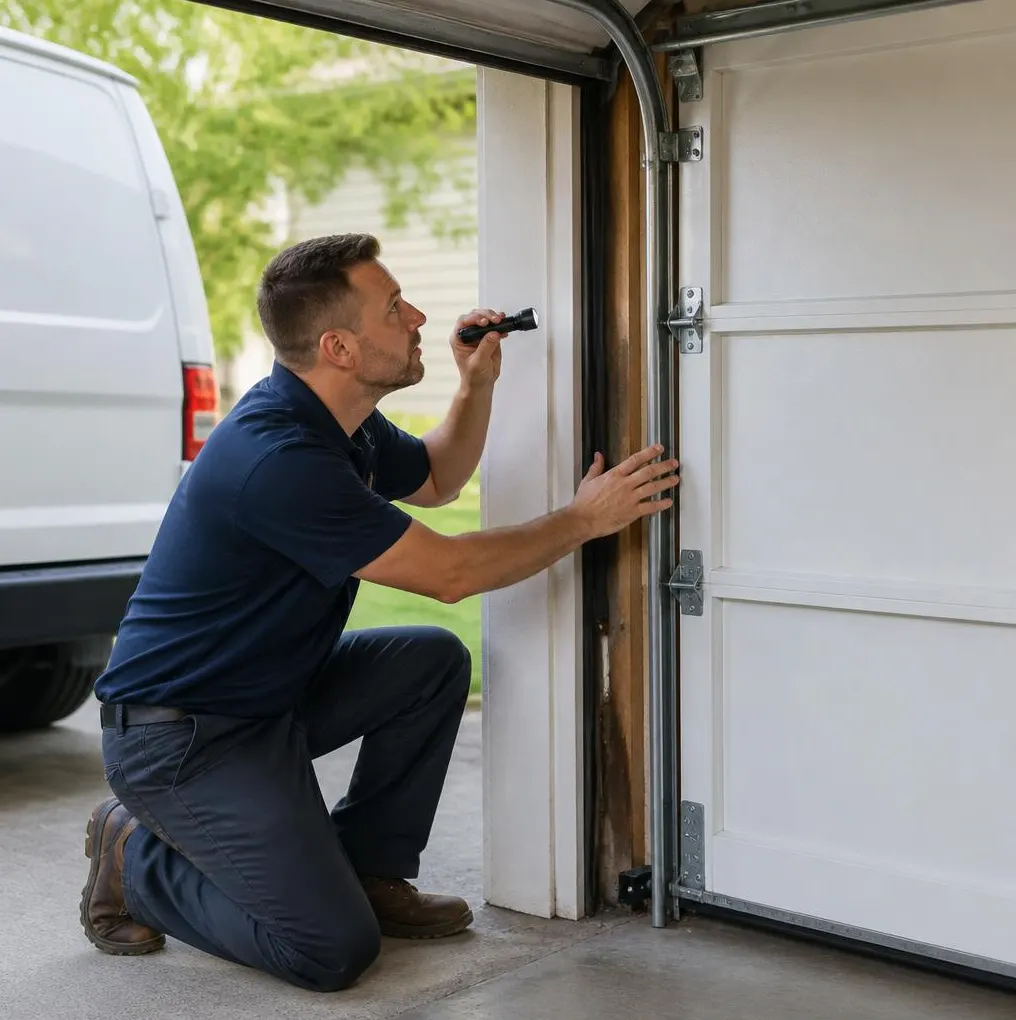
If you're not sure whether what you're looking at is surface rust or structural failure, or you can hear the spring straining but can't tell if it's about to go, that's the point to stop DIY-ing it. Anthony Garage Door Repair can run a full Garage Door Tune-Up & Maintenance visit to check cables, rollers, alignment, and wind-load bracing in one pass, and handle Garage Door Spring Repair or cable replacement on the spot if something's past its service life. It settles the argument with facts instead of guesswork — and it's a lot cheaper than finding out the hard way which side of the debate was right.
If your door has been original equipment since the Clinton administration, give Anthony Garage Door Repair a call. We serve homes and businesses throughout Anthony, FL and nearby Ocala, Silver Springs, and Citra, and we'll tell you straight which parts need attention before storm season winds down and which ones can stay exactly as they are.